
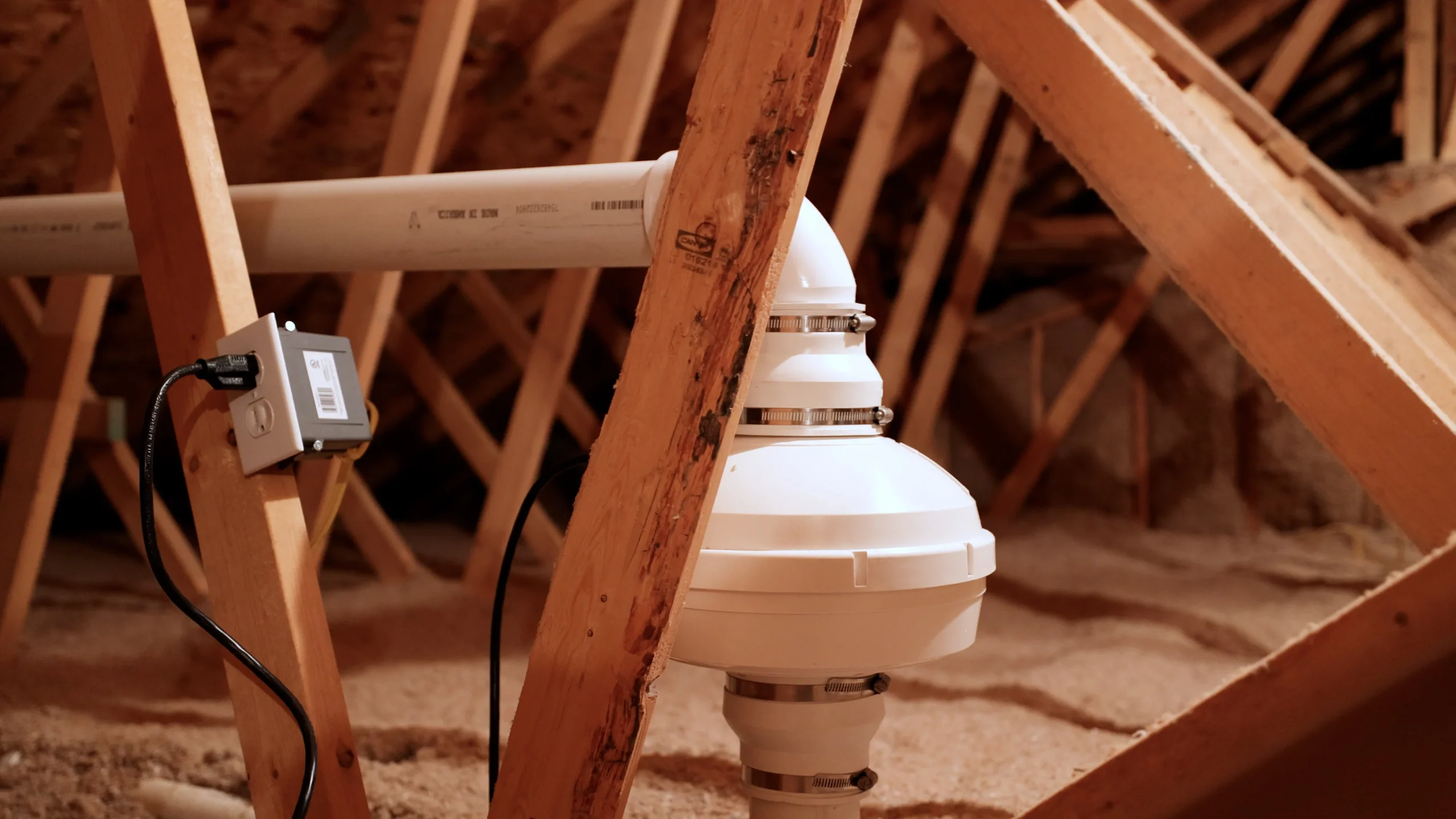
Can a radon fan go in the attic?
An appropriate unoccupied attic can be a fan location. EPA’s consumer guidance distinguishes this from placing the fan in a basement. Suitability also requires a complete review of the vent route and installation requirements.
Ask to see how the proposed location will be reached for service. A location that looks tidy on a drawing may be awkward above a finished bedroom or behind stored belongings. Discuss the access opening and power arrangements while evaluating the route.
- Identify the attic access point.
- Ask how equipment can be replaced.
- Discuss sound near occupied rooms.
How is radon mitigated in a finished basement?
The contractor needs access to the foundation and a workable route out of the lower level. A utility room may offer useful access, but it should not be selected solely because it keeps the pipe out of sight. The proposed collection arrangement must address the foundation.
Bring a basement plan to the estimate. Mark closets, finished ceilings and any built-in cabinetry. Ask which surfaces need to be opened and whether repair is included. A written scope should make the division between mitigation work and finish restoration clear.
For a Ballwin owner planning new flooring, resolving this route before the flooring order can avoid unnecessary surprises. Treat that as coordination advice, not a claim that every installation requires demolition.
- Mark concealed utility chases.
- Photograph accessible unfinished areas.
- Clarify finish repair responsibility.
Interior vs exterior radon systems: what changes?
The route changes the installation and service-access questions. An interior route involves indoor pathways and a roof exit; an exterior proposal involves visible piping and an outdoor equipment location. Both need a suitable design and verification of the radon result.
Compare complete proposals rather than choosing from a single photograph. Ask where the pipe crosses each floor, where the fan sits and what remains visible. If an association requires an exterior review, obtain the requested drawing before committing to that route.
Air Sense can evaluate the house and discuss routing options. Interior routing is not presented here as a standard inclusion or a guaranteed option for every address.
- Compare the full route drawing.
- Check access to the fan location.
- Record appearance preferences in the quote.
How is a walkout basement handled?
A walkout basement is assessed by its foundation and soil contact, not by the presence of an outside door. Separate slab elevations or additions should be identified so they are included in the design discussion.
For Wildwood or Eureka properties, provide a sketch showing the uphill and downhill sides, lower-level rooms and attached spaces. The sketch helps explain the building without pretending that a slope predicts the radon concentration. Keep the test report at the center of the decision.
Ask what verification will show that the completed arrangement works. Concealed piping is valuable only when the complete system remains serviceable and its result is documented.
Questions before you book
Can every radon pipe be concealed?
No. The house may lack a suitable continuous route or accessible fan location. Discuss the alternatives after an assessment.
Should I close a wall around the pipe?
Confirm labeling, access and installation requirements with the professional before enclosing anything. Preserve a way to reach equipment that needs service.